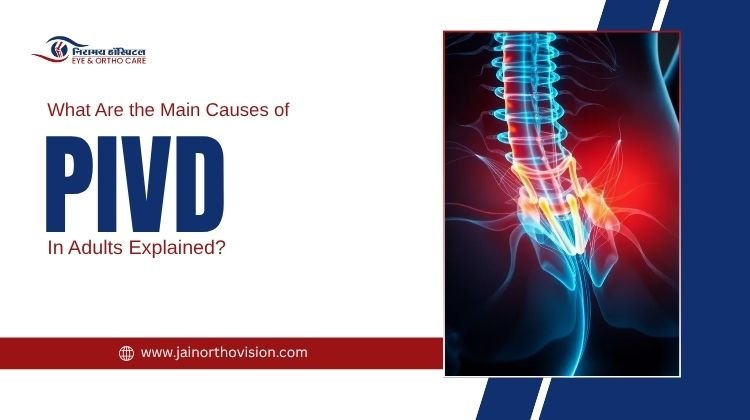
PIVD, or Prolapsed Intervertebral Disc, is one of the most frequently treated spine conditions at Jain Ortho. Patients seeking PIVD Treatment in Kota often describe months of worsening lower back pain, leg numbness, or sudden sharp nerve pain that made daily life difficult before they finally sought professional help.
According to the Global Burden of Disease Study, lower back pain caused by disc-related conditions is among the leading causes of disability in working-age adults across South Asia. In India, increasing screen time, sedentary desk jobs, and poor ergonomic habits have made disc prolapse conditions more common in adults in their thirties and forties than in previous generations.
Fact: The intervertebral disc is a shock-absorbing structure between each pair of vertebrae in the spine. It has a tough outer ring called the annulus fibrosus and a soft gel-like centre called the nucleus pulposus. When the outer ring weakens or tears, the inner material can bulge or leak outward, pressing on spinal nerves. This is what causes the pain, tingling, and weakness that patients describe when they arrive at our clinic.
At Jain Ortho, our experience as a trusted PIVD Specialist in Kota shows that the majority of patients had one or more identifiable lifestyle causes behind their condition. Understanding those causes is the first step toward effective treatment and long-term spine health.
What Is PIVD and How Does It Differ from a Slipped Disc?
Many patients arrive using the term slipped disc, while their diagnosis reads PIVD or disc herniation. These terms describe the same family of conditions. A slipped disc does not literally slip out of place. Instead, the disc material protrudes or bulges beyond its normal boundary.
The medical terms used to describe different stages of this condition include disc bulge, disc herniation, disc prolapse, and disc extrusion. Each represents a different degree of disc material displacement and nerve involvement. At Jain Ortho, your Best PIVD Doctor in Kota will determine the exact stage of your condition through clinical examination and MRI imaging before recommending any treatment pathway.
Understanding the difference matters because the stage of the condition directly determines whether Non-Surgical PIVD Treatment in Kota is appropriate or whether PIVD Surgery in Kota may be needed.
The Main Causes of PIVD in Adults: What the Research and Clinical Experience Tell Us
The causes of PIVD in adults are rarely a single event. In most cases, a combination of gradual degeneration and a triggering factor leads to the prolapse. Here is a detailed look at each primary cause, based on clinical patterns observed at our Spine Specialist for PIVD in Kota practice.
1. Age-Related Lumbar Disc Degeneration
As the body ages, intervertebral discs gradually lose water content and become less flexible. This process, known as lumbar disc degeneration, makes the outer ring of the disc more prone to cracking or tearing under everyday stress. The disc loses its ability to absorb shock effectively, and minor physical strain can trigger a prolapse that would not have affected a younger, healthier disc.
Most patients who present for Disc Prolapse Treatment in Kota are in their thirties to fifties, precisely the age range when degenerative disc disease begins to accelerate if healthy habits are not maintained.
2. Poor Posture and Prolonged Sitting
Sustained poor posture is one of the leading lifestyle causes of PIVD in working professionals. Sitting with a rounded lower back for extended periods places uneven pressure on the lumbar discs. Over time, this compresses the front of the disc repeatedly and pushes disc material backward toward the spinal canal.
This is why patients who work long hours at desks without ergonomic support frequently develop a spinal disc bulge in the lumbar region, which can progress to a full prolapse without warning.
3. Heavy or Improper Lifting
Lifting heavy objects while bending at the waist instead of the knees dramatically increases pressure inside the lumbar discs. A single episode of lifting with poor technique can cause an acute disc prolapse, particularly in a disc that was already weakened by degenerative changes.
This is one of the most common reasons working-age adults in manual occupations present for Slip Disc Treatment in Kota at Jain Ortho.
4. Repetitive Spinal Loading
Certain occupations and activities involve repeated bending, twisting, or vibration of the spine. This repetitive loading accumulates micro-damage in the disc over time, eventually compromising the structural integrity of the annulus fibrosus. Drivers, construction workers, and factory workers are particularly vulnerable to this cause.
5. Physical Inactivity and Weak Core Muscles
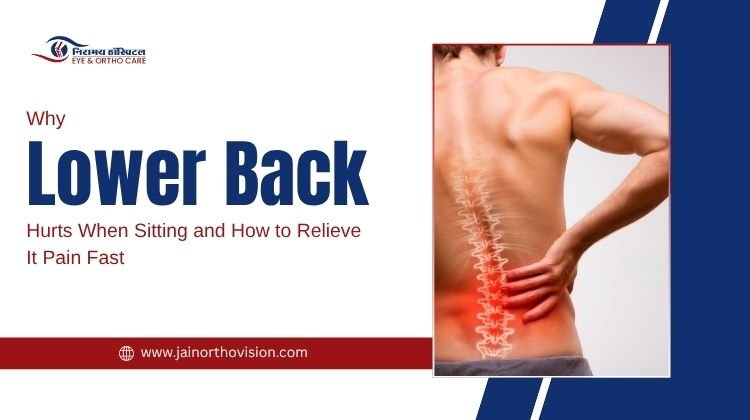
The muscles of the abdomen and lower back act as a natural support system for the spine. When these muscles are weak due to physical inactivity, the intervertebral discs must bear more mechanical load than they are designed to handle. This accelerates lumbar disc degeneration and increases the risk of nerve compression in the spine.
6. Excess Body Weight
Carrying excess body weight, particularly around the abdomen, shifts the centre of gravity forward and increases the load on lumbar discs throughout the day. Obesity is a well-documented risk factor for degenerative disc disease and is consistently identified in patients presenting for Prolapsed Intervertebral Disc Treatment in Kota.
7. Genetic Predisposition
Not all PIVD cases are caused by lifestyle factors alone. Some individuals inherit a tendency toward disc degeneration due to genetic differences in disc composition and structural strength. Patients with a family history of disc problems are at higher risk, even if their lifestyle is otherwise healthy.
8. Acute Trauma or Injury
A fall, road accident, or sudden twisting injury can cause immediate disc herniation, particularly in the lumbar or cervical spine. This type of PIVD requires prompt evaluation at a Trauma Treatment Centre and may require urgent intervention depending on the severity of nerve compression in the spine.
PIVD Causes at a Glance: A Quick Reference Table
The table below summarises the main causes of PIVD in adults, the spinal region most affected, and the population most at risk. This reference is used during patient consultations at Jain Ortho by our Orthopedic Doctor for PIVD in Kota.
| Cause of PIVD | Spinal Region Affected | Population Most at Risk |
| Lumbar disc degeneration | Lumbar (lower back) | Adults over 35 |
| Poor posture and prolonged sitting | Lumbar and cervical | Desk workers and students |
| Heavy or improper lifting | Lumbar | Manual workers |
| Repetitive spinal loading | Lumbar and thoracic | Drivers and factory workers |
| Weak core muscles | Lumbar | Sedentary adults |
| Excess body weight | Lumbar | Overweight and obese adults |
| Genetic predisposition | Any spinal level | Adults with family history |
| Acute trauma or injury | Any spinal level | Road accident and fall victims |
Every cause listed here is something the team at Jain Ortho assesses during your first consultation, because identifying the underlying reason for your PIVD directly shapes your treatment plan.
Symptoms and Causes of Lumbar PIVD Explained: What to Watch For
Understanding the symptoms that accompany PIVD helps patients seek care before the condition progresses to a stage requiring surgical intervention. At Jain Ortho, our Best PIVD Doctor in Kota consistently finds that patients who arrive earlier in the symptom timeline achieve better outcomes with conservative treatment.
Common symptoms of lumbar PIVD include:
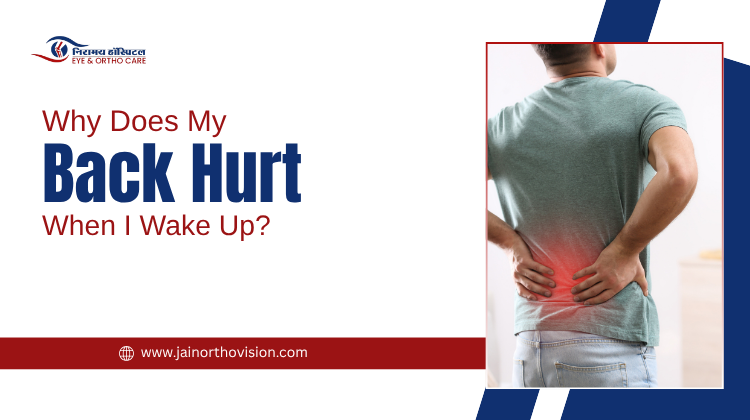
- Persistent lower back pain that worsens with sitting, bending, or coughing
- Pain that radiates down one or both legs, often described as a sharp electric shock sensation
- Tingling or numbness in the thigh, calf, or foot on the affected side
- Weakness in the leg muscles, making walking, climbing stairs, or standing for long periods difficult
- In severe cases, loss of bladder or bowel control, which requires immediate emergency evaluation
Slipped disc symptoms vary depending on which disc is affected and how much nerve compression in the spine has occurred. An MRI scan is the most reliable way to confirm the diagnosis and guide treatment decisions.
How Lifestyle Affects Intervertebral Disc Prolapse: Prevention Strategies That Work
Understanding what causes PIVD in adults also reveals how to prevent it. The lifestyle factors that drive disc degeneration are largely modifiable, meaning consistent daily habits can significantly reduce your risk.
Practical prevention strategies recommended by our Spine Specialist for PIVD in Kota include:
- Maintain a healthy body weight to reduce mechanical load on lumbar discs
- Strengthen your core muscles through consistent exercise including planks, bridges, and controlled abdominal work
- Use correct lifting technique by bending at the knees and keeping the spine straight
- Take regular movement breaks if your work requires prolonged sitting
- Set up your workstation ergonomically with your screen at eye level and lower back supported
- Sleep on a mattress that supports spinal alignment in your natural sleeping position
- Avoid high-impact activities that involve repeated spinal compression without proper conditioning
These strategies are not just preventive. They are also a core part of the Non-Surgical PIVD Treatment in Kota plans designed for patients already managing a disc prolapse at Jain Ortho.
PIVD Treatment in Kota: What Jain Ortho Offers at Every Stage
Jain Ortho provides a complete range of care for every stage of PIVD, from early disc bulge to advanced prolapse requiring surgical intervention. As the leading provider of PIVD Treatment in Kota, our approach is always to exhaust conservative options before considering surgery.
Our PIVD care services include:
- Detailed clinical assessment and MRI-based diagnosis
- Physiotherapy and spinal rehabilitation for pain relief and muscle strengthening
- Targeted pain management including epidural steroid injections when appropriate
- Structured Non-Surgical PIVD Treatment in Kota programmes combining physiotherapy, posture correction, and lifestyle modification
- Minimally invasive PIVD Surgery in Kota for patients who do not respond to conservative care
- Microdiscectomy and other advanced surgical procedures performed by our experienced spine team
- Post-surgical rehabilitation and long-term follow-up care
For patients researching Disc Prolapse Treatment in Kota or Slip Disc Treatment in Kota, Jain Ortho offers transparent treatment plans with clear explanations of every step. Our goal is not just to relieve pain. It is to restore full function and prevent recurrence.
CASE STUDY
Vikram Singh, a software engineer from Kota, presented to Jain Ortho with a history of worsening lower back pain and left leg pain that had been affecting his ability to sit at his desk for more than twenty minutes at a stretch. He had been managing with over-the-counter pain medications for several months before the leg pain became severe enough to disrupt his sleep.
MRI imaging confirmed a significant L4-L5 disc prolapse with moderate nerve compression on the left side. Dr. Arvind Jain reviewed the scan and clinical findings carefully. Given Vikram’s age and the absence of neurological deficits such as weakness or bladder changes, a structured non-surgical programme was recommended as the first line of treatment.
The programme included a targeted physiotherapy protocol focusing on lumbar stabilisation, posture correction for his workstation setup, anti-inflammatory medication for a short prescribed period, and a guided home exercise plan for core strengthening. Vikram was also advised on ergonomic adjustments and daily movement habits to reduce disc loading during his working hours.
He attended every physiotherapy session and implemented the ergonomic changes at his workplace. Within a few weeks, his leg pain began to reduce. His lower back pain improved progressively as his core strength developed.
Outcome: At his follow-up review several months after starting treatment, Vikram reported complete resolution of leg pain and a significant reduction in lower back discomfort. He returned to full working hours without limitation. Repeat clinical assessment confirmed improved neurological status. He continues his home exercise programme as a preventive routine. His case is a clear example of what early, structured PIVD Treatment in Kota can achieve when a patient commits to the process.
FAQ’s About PIVD Causes and Treatment
Q1. What causes PIVD in adults and how can it be prevented?
PIVD is caused by disc degeneration, poor posture, weak core muscles, and improper lifting. Prevention includes regular exercise, ergonomic habits, and healthy body weight maintenance.
Q2. What are the main reasons for a slipped disc in middle-aged adults?
Age-related disc degeneration combined with sedentary lifestyle, poor posture, and repetitive spinal loading are the most common reasons for slipped discs in middle-aged adults.
Q3. How does lifestyle affect intervertebral disc prolapse?
Prolonged sitting, excess weight, poor lifting habits, and weak core muscles all accelerate disc degeneration and significantly increase the risk of intervertebral disc prolapse over time.
Q4. What are the symptoms and causes of lumbar PIVD?
Lumbar PIVD causes lower back pain, leg pain, tingling, and numbness. Causes include disc degeneration, trauma, and sustained poor posture during daily activities.
Q5. Why does disc herniation happen in working professionals?
Long hours of sitting, poor workstation setup, and physical inactivity weaken spinal support structures, making working professionals particularly vulnerable to disc herniation and PIVD over time.
Q6. Is PIVD treatable without surgery?
Yes, most PIVD cases respond well to physiotherapy, posture correction, and pain management. Non-Surgical PIVD Treatment in Kota at Jain Ortho is effective for the majority of patients.
Q7. How long does recovery from PIVD take?
Recovery from non-surgical PIVD treatment typically takes several weeks to a few months. Surgical recovery varies depending on the procedure but is supported by structured post-operative rehabilitation.
Q8. When should I see a PIVD specialist in Kota?
See a specialist if you have persistent back pain, leg pain, numbness, or weakness. Early diagnosis leads to better outcomes and often avoids the need for surgical intervention entirely.
Conclusion
PIVD is a condition rooted in daily habits, physical demands, and the natural aging of the spine. Understanding its causes gives patients the power to act early, either by changing habits to prevent it or by seeking the right care before it worsens. Jain Ortho is committed to providing every patient in Kota with the expertise, diagnosis, and treatment they need to recover fully and protect their spine for the long term. Your spine supports everything you do. Give it the care it deserves.