
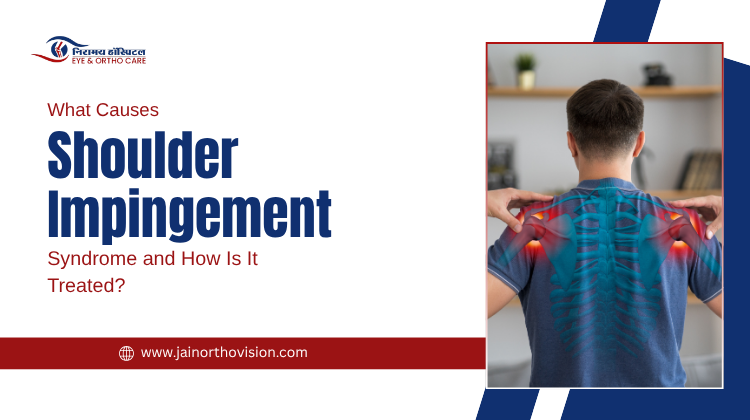
Shoulder impingement syndrome develops when the tendons of the rotator cuff get compressed or pinched as you lift your arm, causing pain and restricted movement. It is one of the most common reasons people visit a doctor for shoulder pain, responsible for a large share of shoulder-related consultations.
At Niramaya Hospital, a trusted orthopedic hospital Kota relies on for shoulder care, we see this condition frequently in athletes, manual laborers, and anyone who repeats overhead movements at work or in daily life.
What Is Shoulder Impingement Syndrome?
The shoulder joint depends on a small space between the top of the upper arm bone and the bony arch above it, called the acromion. Shoulder impingement condition occurs when this space narrows and the rotator cuff tendons get pinched every time you raise your arm.
Over time, this repeated pinching causes inflammation, swelling, and pain. Left untreated, it can progress from simple tendon irritation to more serious damage, including partial or complete rotator cuff tears.
Doctors sometimes refer to this condition by related names, including rotator cuff impingement or subacromial impingement, depending on which structures are most affected.
What Causes Shoulder Impingement Syndrome?
Shoulder impingement problem rarely has a single cause. It usually develops from a combination of repetitive strain, structural factors, and age-related wear.
Common causes include:
- Repetitive overhead motion: Sports like swimming, tennis, and baseball, along with jobs involving painting, lifting, or construction work
- Poor posture: Rounded shoulders and forward head posture reduce space in the shoulder joint over time
- Bone spurs: Small bony growths on the acromion that narrow the subacromial space
- Rotator cuff tendinosis: Thickened, degenerated tendons that take up more room in an already tight space
- Shoulder bursitis: Inflammation of the fluid-filled sac that cushions the joint
- Muscle imbalance or weakness: Weak shoulder stabilizing muscles that let the joint move incorrectly
- Previous shoulder injury: Including a prior shoulder dislocation, which can alter joint mechanics and increase future impingement risk
Athletes and manual laborers who repeat the same shoulder motion daily face a significantly higher risk than the general population.
Recognizing the Symptoms of Shoulder Impingement Syndrome
- Sharp pain when lifting the arm overhead
- A dull, persistent ache at rest, especially at night
- Pain that radiates down the front or side of the shoulder
- Weakness when lifting or rotating the arm
- Difficulty reaching behind the back
- Trouble sleeping on the affected side
- A catching or clicking sensation during certain movements
Because these symptoms overlap with other shoulder conditions, an accurate diagnosis from an orthopaedic doctor in Kota is important before starting treatment.
The Stages of Shoulder Impingement Syndrome
Doctors typically classify shoulder impingement syndrome into three progressive stages, which helps guide treatment decisions.
| Stage | What Happens | Typical Age Group |
| Stage 1 | Mild inflammation and swelling of the tendons, usually reversible | Often under 25 |
| Stage 2 | Tissue thickening and scarring, more frequent pain and restricted movement | Typically 25 to 40 |
| Stage 3 | Tendon degeneration with risk of partial or complete rotator cuff tear | Often over 40 |
How Is Shoulder Impingement Syndrome Diagnosed?
Diagnosing Shoulder impingement disorder starts with a physical examination, where your doctor moves your arm through specific positions to identify pain triggers. This is often enough to confirm a preliminary diagnosis.
Imaging tests help confirm the severity and rule out other conditions:
- X-rays reveal bone spurs or structural abnormalities in the shoulder
- MRI scans show detailed images of the tendons, bursa, and any rotator cuff damage
- Ultrasound can assess tendon thickening and inflammation in real time
How Is Shoulder Impingement Syndrome Treated?

Most cases of shoulder impingement syndrome improve with non-surgical treatment. Between 60 and 90 percent of patients recover fully with conservative care alone.
Conservative treatment (first 8 to 12 weeks):
- Rest and activity modification to avoid overhead motion
- Ice application to reduce inflammation
- Over-the-counter NSAIDs like ibuprofen for pain and swelling
- Physical therapy to restore mobility and strengthen the rotator cuff
- Corticosteroid injections for persistent inflammation and pain
Surgical treatment (when conservative care fails):
- Arthroscopic subacromial decompression, a minimally invasive procedure that creates more space for the tendons
- Rotator cuff repair, if imaging shows a tear alongside the impingement
- Removal of bone spurs contributing to the narrowed space
Surgery is rarely the first step and is generally reserved for patients who do not improve after several months of dedicated conservative treatment.
Physical Therapy Exercises for Shoulder Impingement Syndrome
Physical therapy plays a central role in recovering from shoulder impingement syndrome, whether or not surgery is involved. A structured program typically includes:
- Pendulum stretches to gently restore range of motion
- Rotator cuff strengthening exercises using light resistance bands
- Scapular stabilization exercises to correct posture and shoulder mechanics
- Stretching for the chest and upper back to reduce forward-rounded posture
- Gradual return to overhead activity under professional guidance
Exercises should always be introduced under the supervision of a physical therapist or orthopaedic in Kota, since incorrect form can worsen symptoms.
Preventing Shoulder Impingement Syndrome from Returning
Once symptoms improve, prevention becomes the priority. Shoulder impingement syndrome has a real chance of returning if underlying causes like posture or muscle imbalance are not addressed.
- Maintain good posture throughout the day, especially during desk work
- Continue rotator cuff and shoulder stability exercises even after pain resolves
- Warm up properly before sports or repetitive overhead activity
- Avoid sleeping directly on the affected shoulder
- Take breaks during repetitive tasks that involve raising the arms
When to See an Orthopedic Doctor for Shoulder Pain
Not all shoulder pain is Shoulder pinching syndrome, and getting an accurate diagnosis matters. See an orthopaedic doctor in Kota if you experience:
- Shoulder pain lasting more than a week or two
- Pain that disrupts sleep or daily activities
- Noticeable weakness when lifting the arm
- Pain following a fall or shoulder dislocation
- Stiffness that limits your range of motion, which may suggest frozen shoulder rather than impingement
Why Choose Niramaya Hospital for Shoulder Impingement Treatment in Kota
Niramaya Hospital is recognized for Shoulder Pain Treatment in Kota because our team combines detailed physical assessment with structured physiotherapy, rather than jumping straight to medication or surgery. We also provide Shoulder Dislocation Treatment Doctor in Kota services and Frozen Shoulder Treatment in Kota for patients whose symptoms overlap with or follow impingement.
Frequently Asked Questions About Shoulder Impingement Syndrome
1. Can shoulder impingement syndrome heal without surgery?
Yes. Most patients, between 60 and 90 percent, recover fully with rest, physical therapy, and anti-inflammatory treatment, without ever needing surgery.
2. How long does it take to recover from shoulder impingement syndrome?
Mild cases can improve within a few weeks, while moderate to severe cases may take several months of consistent physical therapy to fully resolve.
3. Is shoulder impingement syndrome the same as a rotator cuff tear?
No, though the two are related. Untreated shoulder impingement syndrome can progress to a partial or complete rotator cuff tear if left unaddressed for a long period.
4. Can I still exercise with shoulder impingement syndrome?
Yes, but only with modified movements that avoid pain, ideally guided by a physical therapist. Overhead lifting and repetitive throwing motions should be avoided until symptoms improve.
5. What is the difference between shoulder impingement and frozen shoulder?
Shoulder impingement mainly causes pain during specific movements like lifting the arm overhead, while frozen shoulder causes progressive stiffness and a significant loss of range of motion in all directions.
Conclusion
Shoulder impingement syndrome is a common but very treatable condition when caught early and managed with the right combination of rest, physical therapy, and posture correction. Ignoring persistent shoulder pain, however, raises the risk of progression to a rotator cuff tear that may require surgery.
If shoulder pain is limiting your daily activities or disrupting your sleep, do not wait for it to worsen. Book a consultation with Niramaya Hospital, your trusted orthopedic hospital Kota destination for Shoulder Impingement Treatment in Kota, and get an accurate diagnosis with a personalized recovery plan. Call us today or visit our clinic to schedule an appointment with our orthopaedic doctor in Kota.