
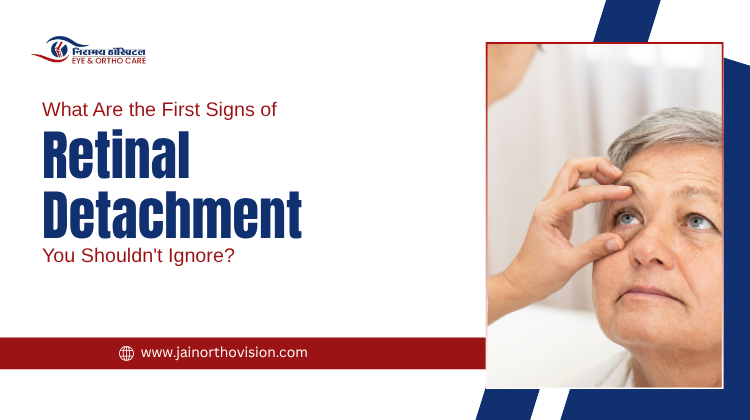
The first signs of retinal detachment usually include a sudden increase in floaters, flashes of light, and a dark shadow or curtain moving across part of your vision. This condition is a true eye emergency, and recognizing these warning signs early can mean the difference between fully saved vision and permanent, irreversible loss.
At Niramaya Hospital, we urge every patient to treat sudden changes in vision as urgent rather than something to watch and wait on. This guide explains exactly what the first signs of retinal detachment look like, who is most at risk, and why acting quickly matters so much.
What Is Retinal Detachment?
The retina is a thin layer of light-sensitive tissue lining the back of the eye, responsible for capturing light and sending visual signals to the brain. Retinal detachment occurs when this tissue pulls away from the supportive layers beneath it, cutting off its normal supply of oxygen and nutrients.
Most cases begin with a small tear or hole in the retina, which allows fluid to seep underneath and gradually lift the retina away from its base. Once this process starts, it does not resolve on its own and typically continues to worsen without prompt treatment.
The First Signs of Retinal Detachment to Watch For
Recognizing the first signs of retinal detachment quickly gives you the best chance of preserving your vision. The condition is usually painless, which makes visual symptoms the only real warning you will receive.
- A sudden increase in floaters: Occasional floaters are normal, but a sudden shower of many new floaters appearing all at once is a red flag
- Flashes of light: Brief flashes or streaks of light, often in your peripheral vision, can occur even with your eyes closed
- A dark shadow or curtain: Many people describe a veil or curtain slowly moving across part of their field of vision
- Sudden blurred vision: Unexplained blurriness that appears quickly rather than gradually
- A shrinking field of vision: A sense that part of your visual field is missing or darkened
Any one of these symptoms alone warrants prompt evaluation, and experiencing more than one at the same time makes urgent care even more critical.
Why Retinal Detachment Symptoms Should Never Be Ignored
Unlike many eye conditions that develop slowly and give ample warning, retinal detachment can progress rapidly once symptoms begin. Delaying care allows more of the retina to detach, which directly increases the risk of permanent vision loss.
The retina cannot survive for long once it loses its blood supply, and the longer it remains detached, the harder it becomes to fully restore vision even with successful surgery. This is precisely why doctors describe retinal detachment as a race against time rather than a condition to monitor casually.
Are Floaters and Flashes Always a Sign of Retinal Detachment?
Not every floater or flash indicates an emergency, and distinguishing between normal and concerning symptoms matters for avoiding unnecessary panic. Floaters are extremely common, especially with age, and most people experience some floaters without ever developing retinal detachment.
The key difference lies in sudden change. A gradual, mild increase in floaters over months is generally not urgent, while a sudden shower of new floaters, especially combined with flashes or a shadow in your vision, should always be evaluated immediately by a specialist eye doctor in Kota.
Who Is Most at Risk for Retinal Detachment?
While retinal detachment can happen to anyone, certain factors significantly raise the risk. Understanding these factors helps you know when to be especially alert to symptoms.
- Nearsightedness (myopia), particularly with a high prescription
- Age over 50, as the gel inside the eye naturally changes and can pull on the retina
- Previous eye surgery, including cataract surgery
- Family history of retinal detachment
- Previous eye injury or trauma, even from years earlier
- Certain retinal conditions, including diabetic retinopathy or areas of retinal thinning
Patients with one or more of these risk factors should schedule regular dilated eye exams, since some early retinal tears cause no symptoms at all.
How Is Retinal Detachment Diagnosed?
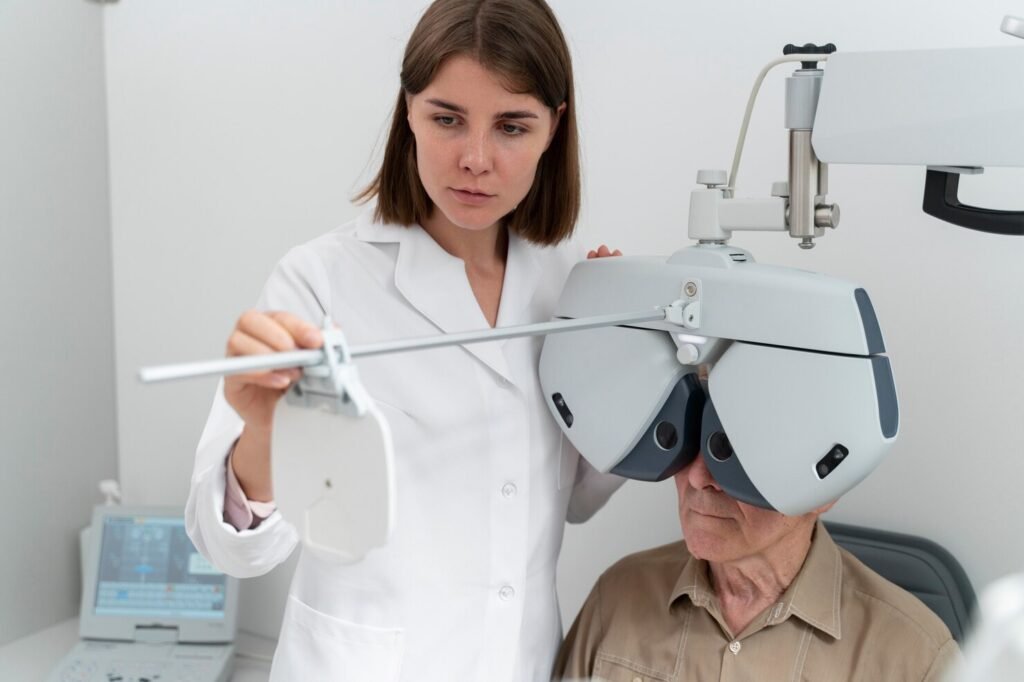
Diagnosing retinal detachment starts with a comprehensive dilated eye exam, which allows the doctor to see the retina clearly and check for tears, holes, or areas of detachment. This exam is quick, painless, and remains the most reliable way to catch problems early.
In some cases, additional imaging such as ultrasound may be used, particularly if bleeding inside the eye makes it difficult to view the retina directly. These tools help confirm the extent of detachment and guide the treatment plan.
Treatment Options for Retinal Detachment
Treatment depends heavily on how much of the retina is affected and how quickly the patient seeks care after symptoms begin. Several approaches are commonly used, sometimes in combination.
- Laser photocoagulation: Seals small retinal tears before they progress to full detachment
- Cryopexy: Uses controlled freezing to seal a retinal tear
- Pneumatic retinopexy: Uses a gas bubble to help reposition the retina against the eye wall
- Scleral buckle surgery: Places a band around the eye to relieve pulling on the retina
- Vitrectomy: Removes the gel inside the eye and replaces it with a supportive substance to help the retina reattach
Catching a retinal tear before it progresses to a full detachment allows for far less invasive treatment, which is another strong reason not to delay care.
What Happens If Treatment Is Delayed?
Delaying treatment for retinal detachment carries serious consequences that go beyond temporary blurred vision. As more of the retina detaches, particularly if the detachment reaches the macula, the central part of the retina responsible for sharp vision, permanent vision loss becomes far more likely.
Even when surgery is eventually successful in reattaching the retina, vision may not fully recover if treatment was significantly delayed. This is why doctors consistently emphasize seeking care within hours of noticing symptoms, not days.
When to Seek Emergency Eye Care
Certain situations call for immediate emergency care rather than a routine appointment scheduled for later in the week.
- Sudden onset of many new floaters
- New flashes of light, especially in combination with other symptoms
- A shadow, curtain, or veil affecting your vision
- Sudden, unexplained blurriness or vision loss
- Any eye injury followed by new visual disturbances
If you notice any of these signs, contact an eye doctor Kota patients trust immediately or go to the nearest emergency facility rather than waiting to see if symptoms improve on their own.
Why Choose Niramaya Hospital for Retinal Detachment Care in Kota
Time is the single most important factor in preserving vision when retinal detachment occurs, which means access to prompt, expert evaluation matters enormously. As a trusted eye care hospital in Kota, Niramaya Hospital prioritizes urgent retinal cases so patients are seen and evaluated as quickly as possible.
Our team is equipped to perform eye surgery Kota patients need for both retinal tears and full detachment, using the treatment approach best suited to the specific pattern and extent of detachment identified during examination.
Frequently Asked Questions About Retinal Detachment
1. Is retinal detachment painful?
No. Retinal detachment is usually painless, which is exactly why recognizing visual symptoms like floaters, flashes, and shadows is so important, since pain will not alert you to the problem.
2. Can retinal detachment cause permanent blindness if untreated?
Yes. Untreated retinal detachment can lead to permanent vision loss, particularly if the detachment progresses to involve the macula, the part of the retina responsible for sharp central vision.
3. Are floaters always a sign of retinal detachment?
No. Occasional floaters are common and usually harmless, especially with age. A sudden shower of many new floaters, particularly combined with flashes or a shadow in your vision, is the pattern that warrants urgent evaluation.
4. How quickly should I see a doctor if I notice symptoms?
Immediately. Retinal detachment is considered a medical emergency, and seeking care within hours rather than days significantly improves the chances of preserving vision through treatment.
5. Can retinal detachment happen again after successful treatment?
It is possible, though uncommon, for a new tear or detachment to develop in the same or the other eye after successful treatment, which is why regular follow-up eye exams remain important even after recovery.
Conclusion
Recognizing the first signs of retinal detachment, including sudden floaters, flashes of light, and a shadow moving across your vision, gives you the best possible chance of preserving your sight. This is a condition where speed matters more than almost any other factor in the outcome, so any sudden visual change deserves immediate attention rather than a wait-and-see approach.
If you are experiencing any sudden changes in your vision, do not wait for symptoms to worsen before seeking help. Contact Niramaya Hospital right away and let our experienced team examine your eyes and provide the urgent care your vision may need. Call us now or visit our clinic immediately if you notice any warning signs.