
Spine health tips for work matter more than most people realize, especially with over 80 percent of jobs today involving long hours of sitting. Poor posture and an unsupportive desk setup can quietly strain your spine every single day, leading to chronic back pain over time.
At Niramaya Hospital, we regularly see patients whose back pain traces back not to an injury, but to years of poor workplace habits.
Why Spine Health Tips for Work Matter More Than Ever
Sitting for extended periods puts more pressure on the spinal discs than standing does, especially when posture is poor. Over time, this pressure contributes to stiffness, muscle imbalance, and chronic low back pain.
The shift toward remote and hybrid work has made the problem worse for many people. Home workstations are often improvised, without the ergonomic support of a properly designed office setup, which is exactly why spine health tips for work apply just as much at the kitchen table as they do in a corporate office.
Left unaddressed, these small daily strains add up. What starts as mild stiffness can progress into persistent pain that eventually needs professional Low Back Pain Treatment in Kota to resolve.
Common Causes of Back Pain and Poor Posture at Work
Understanding what causes workplace back pain makes prevention far more effective. The most common contributors include:
- Prolonged sitting: Long, uninterrupted hours at a desk without movement breaks
- Poor chair support: Chairs without proper lumbar support force the lower back to overcompensate
- Incorrect monitor height: Looking down or up at a screen strains the neck and upper back
- Slouched posture: Rounded shoulders and forward head position shift weight unevenly across the spine
- Improper lifting technique: Bending from the waist instead of the knees when lifting objects
- Carrying heavy, unevenly distributed bags: Placing repeated strain on one side of the body
Recognizing which of these habits applies to your own workday is the first step toward meaningful change.
Essential Spine Health Tips for Work: Sitting Posture
Good sitting posture is the foundation of any effective approach to spine health at work. A few adjustments make a significant difference.
- Sit upright with relaxed shoulders and your back supported by the chair’s lumbar curve
- Keep your feet flat on the floor, with knees at roughly a 90 degree angle
- Position your hips slightly higher than your knees to reduce lower back strain
- Avoid crossing your legs for long periods, which can tilt the pelvis unevenly
- Keep your elbows close to your body at about a 90 degree angle while typing
Small, consistent posture corrections throughout the day matter more than perfect posture for a single hour.
Setting Up an Ergonomic Workstation
An ergonomic workstation supports your natural spinal alignment instead of working against it. This is one of the most effective long-term investments you can make for your back.
| Element | Ergonomic Guideline |
| Chair | Adjustable height with lumbar support, feet flat on the floor |
| Monitor | Top of screen at or slightly below eye level, arm’s length away |
| Keyboard and mouse | Positioned so elbows stay close to the body at 90 degrees |
| Desk height | Allows forearms to rest parallel to the floor |
| Lighting | Bright enough to avoid leaning forward toward the screen |
If a full ergonomic setup is not available, simple tools like a lumbar support cushion or a laptop stand can meaningfully improve alignment without a major expense.
Movement Habits That Protect Your Spine
Staying still for hours is one of the biggest risk factors for workplace back pain, regardless of how good your posture is. Movement is just as important as posture itself.
- Set a timer to stand and stretch every 30 to 60 minutes
- Take short walking breaks during calls or between tasks
- Alternate between sitting and standing if a standing desk is available
- Do gentle stretches for the neck, shoulders, and lower back during breaks
- Avoid staying in any single position, seated or standing, for too long
These small breaks reduce stiffness and help maintain healthy blood flow to the muscles supporting your spine.
Exercises to Strengthen Your Back for Work
Building core and back strength outside of work hours makes your spine more resilient during the day. A simple, consistent routine goes a long way.
- Core strengthening exercises, such as planks, to support the lower back
- Glute bridges to strengthen the muscles that stabilize the pelvis and spine
- Cat-cow stretches to improve spinal flexibility and relieve tension
- Chest and hip flexor stretches to counter the effects of prolonged sitting
- Walking or swimming as low-impact activities that support overall spine health
Consistency matters more than intensity. Ten minutes daily produces better results than an occasional long session.
When Poor Posture Becomes a Medical Concern
Most posture-related back pain improves with better habits, but certain symptoms signal it is time to consult a professional rather than wait it out.
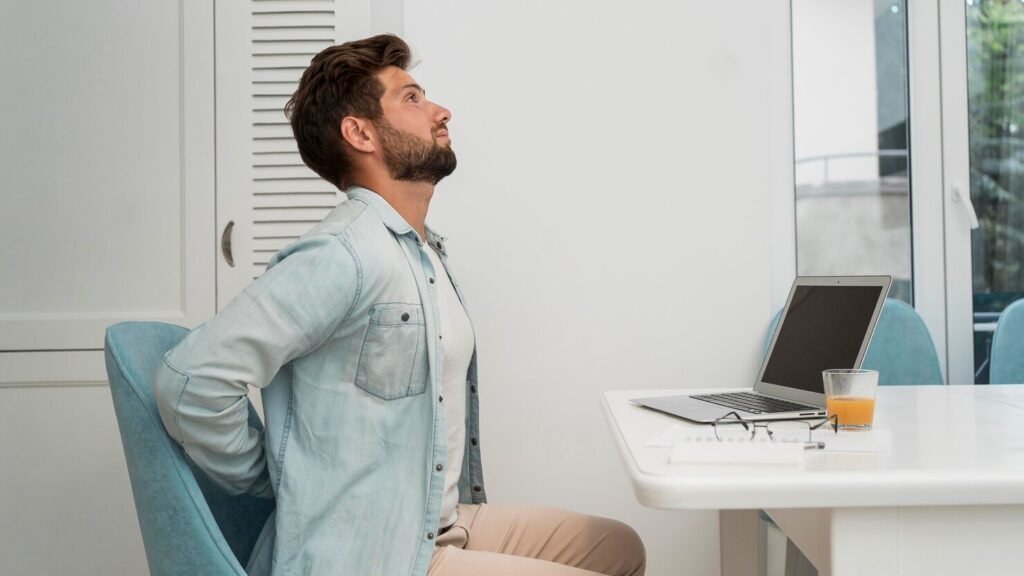
- Pain that radiates into the arms or legs, or numbness and tingling
- Back pain that persists for more than two to three weeks despite posture changes
- Pain following a fall, accident, or heavy lifting injury
- Weakness that affects grip strength or the ability to stand and walk normally
- Pain that disrupts sleep or daily function
Radiating pain or numbness often points to nerve involvement, and patients experiencing these symptoms should consult Spine Injury Treatment Specialists in Kota rather than continuing to self-manage at home.
Back pain following a fall, accident, or sudden heavy impact deserves particular caution. Delaying evaluation in these cases can turn a manageable injury into one that needs more extensive Spine Fracture Treatment in Kota, so prompt assessment is always the safer choice.
Building Long-Term Spine Health Habits Beyond the Desk
Spine health tips for work are most effective when paired with healthy habits outside the office too. What you do after hours directly affects how your spine holds up during the workday.
- Maintain a healthy body weight to reduce load on the lower spine
- Sleep on a supportive mattress that keeps the spine in a neutral position
- Stay hydrated, since spinal discs rely on adequate hydration to stay cushioned
- Avoid smoking, which reduces blood flow to spinal tissues and slows healing
- Wear supportive footwear, especially during long periods of standing
Why Choose Niramaya Hospital for Spine Care in Kota
Preventing back pain at work is important, but when pain does develop, getting the right diagnosis matters just as much as the treatment itself. A trusted orthopedic hospital Kota patients rely on should be able to distinguish between simple postural strain and a more serious underlying spine condition.
Our team at Niramaya Hospital combines a detailed physical assessment with practical, realistic guidance patients can actually follow at their own workstations. Whether your concern is everyday stiffness or a more significant spine injury, an experienced orthopaedic doctor in Kota can help you build a plan suited to your specific work environment and daily routine.
Frequently Asked Questions About Spine Health and Workplace Back Pain
1. How can I improve my posture while working from home?
Set up your workstation with a supportive chair, position your monitor at eye level, and take movement breaks every 30 to 60 minutes, even without dedicated office furniture.
2. Is standing all day better for my spine than sitting?
Not necessarily. Standing for long, uninterrupted periods can be just as harmful as sitting. Alternating between sitting and standing throughout the day is generally the healthiest approach.
3. How long should I sit before taking a break for my back?
Most experts recommend standing and moving every 30 to 60 minutes, even if it is just a short walk or a few stretches at your desk.
4. Can poor posture at work cause permanent spine damage?
Chronic poor posture rarely causes permanent damage on its own, but it can lead to persistent pain, disc strain, and muscle imbalances if left unaddressed for years without correction.
5. When should I see a doctor for work-related back pain?
See a doctor if pain lasts more than two to three weeks, radiates into your arms or legs, follows an injury, or is accompanied by numbness, tingling, or weakness.
Conclusion
Spine health tips for work do not require an expensive office overhaul, just consistent attention to posture, movement, and workstation setup. Small daily changes, like adjusting your chair height or taking regular movement breaks, add up to meaningful protection for your spine over time.
If workplace back pain has become a daily struggle despite your best efforts, do not wait for it to worsen. Book a consultation with Niramaya Hospital and let our experienced team assess your spine health and build a personalized prevention and treatment plan. Call us today or visit our clinic to schedule an appointment.