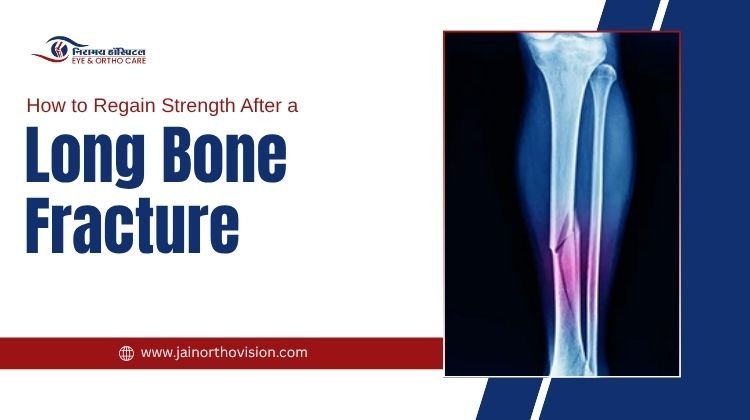

A leg fracture is not just a broken bone. It is a disruption to your daily life, your independence, and your confidence. Patients searching for leg fracture treatment near me often want one clear answer: when will I walk again?
The honest answer is that recovery timelines vary. However, with the right bone fracture treatment and a structured rehabilitation plan, most patients return to walking sooner than they expect.
Fact: According to the American Academy of Orthopaedic Surgeons, most lower limb fractures require structured rehabilitation to restore full walking ability. The type of bone broken, the severity of the fracture, and the patient’s age all directly influence the recovery timeline.
At Jain Ortho, our experience with Long Bone Fracture Treatment In Kota has shown that patients who follow a guided recovery plan consistently achieve better walking outcomes compared to those who attempt recovery without professional support.
The Four Bone Healing Stages That Determine When You Can Walk
Before understanding when you will walk, it helps to understand how your body repairs a broken bone. These bone healing stages are what every orthopaedic surgeon monitors during your recovery.
Stage 1: Inflammation (Days 1 to 7) Immediately after a fracture, the body sends blood flow to the area. Swelling and pain signal that repair has begun. This stage is uncomfortable but necessary.
Stage 2: Soft Callus Formation (Weeks 2 to 6) New soft tissue bridges the broken ends of the bone. The fracture site starts to stabilize but is not yet strong enough for weight bearing.
Stage 3: Hard Callus Formation (Weeks 6 to 12) The soft tissue gradually hardens into bone. This is when most patients begin supervised weight bearing after fracture under medical guidance.
Stage 4: Bone Remodelling (Months 3 to 24) The bone reshapes and strengthens over time. Full walking ability is typically restored during or after this stage, depending on the fracture type.
Understanding these stages helps patients set realistic expectations and avoid the mistake of walking too soon, which can disrupt healing significantly.
Walking After a Leg Fracture: A Recovery Timeline by Fracture Type
Not all leg fractures heal at the same speed. The location and complexity of the break plays a major role in determining the leg fracture recovery time. Here is a general reference guide used in orthopaedic practice.
| Fracture Type | Bone Involved | Approximate Walking Timeline |
| Stress Fracture | Tibia or Fibula | Several weeks with rest |
| Simple Tibia Fracture | Tibia | Six to twelve weeks |
| Femur (Thigh Bone) Fracture | Femur | Three to six months |
| Fibula Fracture | Fibula | Four to eight weeks |
| Complex or Comminuted Fracture | Any long bone | Six months or more |
| Post-Surgical Fracture Repair | Tibia or Femur | Depends on fixation method |
This table reflects general timelines. Your orthopaedic surgeon will give you a personalized timeline based on your X-rays, age, nutrition, and bone density. For patients seeking treatment for bone fracture in leg in Kota, Jain Ortho provides a complete assessment to build an individualised recovery plan.
When Can I Start Walking After a Broken Leg Surgery?
This is one of the most common questions asked after surgery. The answer depends largely on the type of fixation used and which bone was repaired.
After internal fixation surgery, such as a rod or plate and screws, most surgeons allow toe-touch or partial weight bearing within two to four weeks. Full weight bearing typically follows at six to twelve weeks, once X-rays confirm adequate bone callus formation.
For non-surgical cases managed with a cast, the cast removal recovery time ranges from six to twelve weeks for most long bone fractures. Physiotherapy begins immediately after cast removal to restore strength and movement.
At Jain Ortho, every patient receiving Long Bone Fracture Treatment In Kota receives a clear, week-by-week weight bearing schedule so there is no guesswork during recovery.
Physical Therapy for Leg Fracture: The Bridge Between Healing and Walking
Many patients underestimate the role of physiotherapy. Bone healing is only one part of recovery. Muscles weaken significantly during immobilisation, and joints become stiff. Physical therapy for leg fracture recovery addresses both of these issues directly.
A well-designed physiotherapy programme typically includes:
- Range of motion exercises starting soon after surgery or immobilisation
- Gentle strengthening exercises for the quadriceps, hamstrings, and calf muscles
- Gait training to relearn normal walking patterns
- Balance and coordination drills to prevent falls during recovery
- Gradual progression from assisted walking to independent walking
Fracture rehabilitation exercises are not optional. Patients who skip physiotherapy often take significantly longer to return to normal walking and face a higher risk of long-term stiffness and weakness.
How to Speed Up Walking After Bone Fracture Healing
Patients often ask what they can do to recover faster. While there are no shortcuts to bone healing, several evidence-based strategies can support and accelerate your recovery.
Practical tips to support faster recovery:
- Eat a diet rich in calcium and vitamin D to support bone rebuilding
- Stay well hydrated, as hydration supports cell repair and tissue health
- Follow your physiotherapy schedule without missing sessions
- Avoid smoking, which is known to slow bone healing significantly
- Attend all follow-up appointments so your surgeon can monitor healing with X-rays
- Use walking aids correctly and only progress to unsupported walking when your surgeon approves
Patients who combine proper bone fracture treatment near me with these lifestyle habits consistently achieve better and faster outcomes. At Jain Ortho, our team provides nutritional guidance alongside medical care as part of our holistic approach to broken leg healing duration management.
Long Bone Fracture Treatment In Kota: What Jain Ortho Offers
Jain Ortho is a trusted name for Long Bone Fracture Treatment In Kota, offering a full spectrum of orthopaedic care under one roof. Our approach combines accurate diagnosis, advanced surgical techniques, and structured post-operative rehabilitation.
Our services for leg fracture patients include:
- Digital X-ray and imaging for precise fracture assessment
- Closed and open reduction with internal fixation (ORIF) surgery
- Cast and splinting services for non-surgical fractures
- On-site physiotherapy and gait training
- Regular follow-up consultations with progress tracking
Whether you have a simple fibula fracture or a complex femur injury, our team has the experience and infrastructure to support your full recovery. For anyone searching for bone fracture treatment cost in India that offers genuine value without compromising on care, Jain Ortho provides transparent pricing and personalized treatment plans.
CASE STUDY
Ramesh Meena, a school teacher from Kota, sustained a mid-shaft tibia fracture after a road accident near his home. He arrived at Jain Ortho unable to bear any weight on his left leg and was in significant pain. His family was worried about whether he would ever walk normally again.
After a thorough clinical and radiological assessment, Dr. Arvind Jain recommended surgical fixation using an intramedullary nail, a minimally invasive technique that stabilises the bone from inside. Surgery was completed successfully, and Ramesh was mobilised with a walker within a week.
A structured physiotherapy programme began at the two-week mark. Ramesh attended every session consistently and followed the nutritional and activity guidelines provided by our team. His X-rays at eight weeks showed strong callus formation, and he began supervised walking without support shortly after.
Outcome: Ramesh returned to his full teaching duties after a few months of guided recovery. He credits the team at Jain Ortho for his successful return to normal walking. He continues his prescribed exercises to maintain strength and prevent future injury.
FAQ’s About Walking After a Leg Fracture
Q1. How long does it take to walk normally after a leg fracture?
Most patients walk normally within three to six months. Recovery depends on fracture type, treatment method, and how consistently physiotherapy is followed.
Q2. When can I start walking after a broken leg surgery?
Partial walking with support often begins two to four weeks after surgery. Full unsupported walking is typically allowed after six to twelve weeks.
Q3. What is the recovery timeline for walking after a tibia fracture?
A tibia fracture generally allows partial weight bearing at six to eight weeks. Full walking without support is common between three and five months.
Q4. How do I speed up walking after bone fracture healing?
Eat calcium-rich foods, attend every physiotherapy session, avoid smoking, and follow your surgeon’s weight bearing instructions consistently throughout recovery.
Q5. Does age affect how fast I walk after a broken leg?
Yes, younger patients generally heal faster. Older adults may take longer due to lower bone density, but consistent rehabilitation significantly improves outcomes at any age.
Q6. What is cast removal recovery time for a leg fracture?
After cast removal, most patients need four to eight additional weeks of physiotherapy before walking comfortably without assistance or pain.
Q7. Can I walk with a hairline or stress fracture in my leg?
Walking on a stress fracture without approval can worsen the injury. Always consult an eye specialist in Kota or orthopaedic doctor before bearing weight on any suspected fracture.
Q8. What are fracture rehabilitation exercises I can do at home?
Common home exercises include ankle pumps, straight leg raises, and gentle knee bends. Always follow your physiotherapist’s specific instructions before starting any exercise.
Conclusion
Walking after a leg fracture is a process that requires patience, professional guidance, and consistent effort. The timeline varies for every patient, but with the right Long Bone Fracture Treatment In Kota, most people return to full walking ability. Jain Ortho is committed to supporting every patient through each stage of recovery, from the first X-ray to the final physiotherapy session. Your path back to walking starts with a single step toward expert care.