
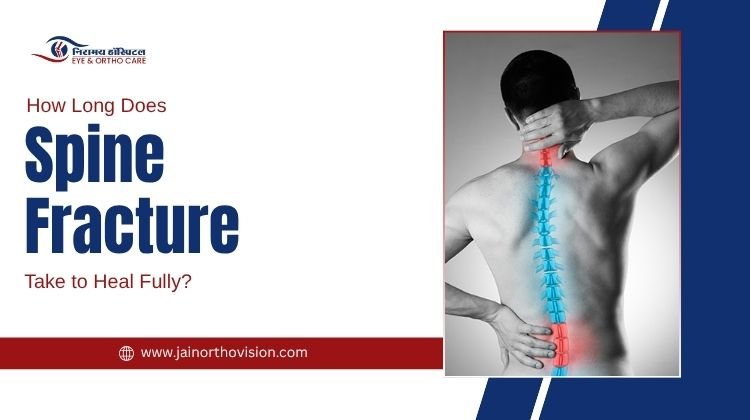
A spine fracture is not like breaking a wrist or a leg. The spine carries your entire upper body weight, protects your spinal cord, and participates in nearly every movement you make throughout the day. When a vertebra fractures, the healing process must balance protecting the fracture site while preventing the serious secondary complications that come with prolonged immobility.
Patients who visit Jain Ortho for spine fracture treatment in Kota often arrive with one urgent question: how long will this take to heal? The answer depends on the fracture type, its location in the spine, whether nerves are involved, the patient’s age and bone density, and how consistently the treatment plan is followed.
Quick Fact: Vertebral fractures are among the most common fractures in adults, particularly in older populations with reduced bone density. A significant proportion of these fractures are compression fractures caused by osteoporosis, minor falls, or sustained mechanical stress on a weakened spine. Many go undiagnosed for weeks because the initial pain is mistaken for a muscle strain.
Types of Spine Fractures and How They Affect Healing Time
Not every spine fracture heals the same way or within the same timeframe. Understanding the spine fracture symptoms and treatment path begins with identifying the fracture type.
1. Compression Fractures
A compression fracture occurs when a vertebra collapses under downward pressure. This is the most common type and is frequently associated with osteoporosis. Stable compression fractures without nerve involvement are often managed with non-surgical spine fracture care including bracing, activity modification, and physiotherapy. Compression fracture healing time is generally measured in several weeks to a few months depending on bone quality and adherence to treatment.
2. Burst Fractures
A burst fracture involves the vertebra shattering under extreme force, with fragments potentially spreading in multiple directions. This type carries a higher risk of spinal cord or nerve injury and often requires surgical stabilization. Recovery is longer and more complex than a compression fracture.
3. Flexion-Distraction Fractures
These occur when the spine is forcefully bent forward while the lower body is restrained, such as in certain vehicle accidents. They involve both the bony and soft tissue structures of the spine and typically require surgical intervention.
4. Fracture-Dislocations
The most severe type, where the vertebra not only breaks but shifts out of position. Surgical treatment is almost always required and rehabilitation is extensive.
The best spine fracture treatment in Kota at Jain Ortho begins with accurate classification of the fracture through imaging to determine the most appropriate treatment pathway.
How Long Does a Spinal Fracture Take to Heal Completely
How long does a spinal fracture take to heal completely is the most common question asked by patients and their families after diagnosis. Here is a phase-by-phase guide to the back fracture recovery time under specialist care:
1. Acute Phase
Immediately following the fracture, the priority is pain management, protection of the injury, and prevention of further displacement. Patients with stable fractures may be fitted with a spinal orthosis or brace. Those with unstable fractures proceed to surgical planning. Movement is restricted but not eliminated during this phase.
2. Bone Consolidation Phase
During this period, new bone tissue forms at the fracture site through a natural repair process. The body lays down a soft callus first, which then gradually hardens into mature bone. This process is ongoing throughout the weeks following injury and is monitored through imaging.
3. Rehabilitation Phase
Once sufficient bone healing is confirmed, physiotherapy after spinal fracture begins in earnest. This phase focuses on restoring spinal mobility, rebuilding the core and paraspinal muscles that support the vertebral column, and retraining the patient’s posture and movement patterns.
4. Return to Function Phase
The final phase involves progressively returning to normal daily activities, work, and where appropriate, recreational activities. Patients at Jain Ortho receive structured guidance through this phase as part of their spinal injury recovery program.
Recovery Time Comparison Table for Different Spine Fractures
| Fracture Type | Treatment Approach | Typical Recovery Focus |
| Stable Compression Fracture | Non-surgical with bracing and physiotherapy | Pain management, mobility restoration, core strengthening |
| Osteoporotic Compression Fracture | Non-surgical or minimally invasive procedure | Bone density support, fall prevention, gentle rehabilitation |
| Burst Fracture Without Nerve Injury | Surgery or conservative depending on stability | Surgical recovery, progressive rehabilitation |
| Burst Fracture With Nerve Involvement | Surgical decompression and stabilization | Neurological monitoring, intensive rehabilitation |
| Flexion-Distraction Fracture | Often surgical | Spinal alignment restoration, extended rehabilitation |
| Fracture-Dislocation | Surgical stabilization | Complex long-term rehabilitation and functional recovery |
This table is a general clinical framework. Every patient at the trusted spine fracture doctors in Kota at Jain Ortho receives an individualized recovery plan based on their specific imaging, symptoms, and health status.
Can Spinal Fractures Heal Without Surgery
Can spinal fractures heal without surgery and how long it takes depends entirely on fracture stability and the absence of neurological involvement. Many stable compression fractures, particularly those without nerve compression or significant vertebral height loss, are effectively managed through non-surgical spine fracture care.
Non-surgical management at Jain Ortho typically includes:
- Spinal bracing: A custom or prefabricated brace limits movement at the fracture site and supports the spine during early healing.
- Pain management: Oral medication and in some cases targeted injections reduce acute pain and allow the patient to participate in rehabilitation.
- Activity modification: Specific movements and positions that increase load on the fracture site are identified and avoided during the healing period.
- Physiotherapy after spinal fracture: Gentle exercises begin early to maintain circulation, prevent muscle loss, and prepare the spine for progressive rehabilitation.
- Nutritional support: Adequate intake of calcium, vitamin D, and protein directly supports the bone healing process in the spine and reduces healing time.
Patients who follow their non-surgical program consistently under specialist guidance at a spine injury treatment center achieve outcomes comparable to surgical management for appropriately selected fracture types.
Physiotherapy After Spinal Fracture: What to Expect
Physiotherapy after spinal fracture is not optional. It is a clinical necessity. Without it, even a well-healed bone leaves the patient with weakened spinal muscles, poor posture, reduced mobility, and a significantly elevated risk of re-fracture.
Early Physiotherapy Goals
- Gentle breathing exercises to maintain lung function and reduce pain from movement
- Careful positioning techniques to reduce pressure on the fracture site during rest
- Isometric exercises that contract muscles without creating spinal movement
- Circulation exercises for the legs to prevent deep vein complications during bed rest periods
Intermediate Physiotherapy Goals
- Progressive core muscle activation targeting the deep spinal stabilizers
- Gentle spinal extension exercises appropriate to the fracture type and location
- Posture retraining to reduce forward-loading stress on healing vertebrae
- Supervised walking progression to restore upright function safely
Advanced Physiotherapy Goals
- Functional strength rebuilding for daily activities such as bending, lifting, and carrying
- Balance and proprioception training to reduce fall risk, particularly in older patients
- Work and activity-specific rehabilitation for patients returning to physically demanding roles
The expert care for spine fractures in Kota at Jain Ortho is delivered by physiotherapists experienced specifically in spinal conditions, ensuring every phase of rehabilitation is safe and correctly progressed.
Healing Duration for Vertebral Fracture in Elderly Patients
The healing duration for vertebral fracture in elderly patients deserves specific attention because it differs meaningfully from recovery in younger adults. Older patients face a unique combination of challenges:
- Reduced bone density means healing takes longer and the risk of adjacent vertebral fractures is higher.
- Muscle weakness and reduced balance increase fall risk during rehabilitation.
- Underlying health conditions such as diabetes or cardiovascular disease can slow the healing process.
- Medication such as corticosteroids, commonly used in older patients, reduces bone density further.
At Jain Ortho, elderly patients receiving spine fracture treatment in Kota are assessed for bone density as part of their initial workup. Where osteoporosis is identified, bone-strengthening treatment is incorporated alongside fracture management to improve both healing outcomes and long-term spinal resilience.
The advanced solutions for spinal fractures in Kota available at Jain Ortho include minimally invasive procedures such as vertebroplasty and kyphoplasty for eligible elderly patients with osteoporotic compression fractures. These procedures stabilize the fractured vertebra quickly, reduce pain rapidly, and allow earlier rehabilitation compared to prolonged conservative management in selected cases.
Case Study
Sarita fell while descending stairs at home and experienced immediate, severe mid-back pain. She assumed it was a muscle injury and managed with rest for several weeks before the pain became severe enough to seek medical care.
When Sarita visited Jain Ortho, imaging revealed a compression fracture of a thoracic vertebra with moderate height loss. Bone density testing confirmed she had significant osteoporosis that had gone undetected. The fracture was stable with no nerve involvement, making her a suitable candidate for non-surgical spine fracture care combined with a minimally invasive stabilization procedure.
Following the procedure at Jain Ortho, Sarita’s acute pain reduced substantially within days. She was enrolled in a structured physiotherapy after spinal fracture program and began bone-strengthening treatment for her underlying osteoporosis simultaneously.
Sarita regained full mobility and returned to her daily routine including morning walks and household activities. She has had no further fractures and continues her bone health program. Her case illustrates that vertebral fracture healing in elderly patients, when managed correctly by trusted spine fracture doctors in Kota, leads to full functional recovery even in complex presentations.
Frequently Asked Questions
Q1. How long does a spinal fracture take to heal completely?
Healing time depends on fracture type, patient age, and treatment approach. Stable fractures generally heal with consistent specialist-guided care over several months.
Q2. What is the recovery time for a compression fracture in the lower back?
Stable lower back compression fractures typically respond well to non-surgical care with gradual improvement achieved through bracing, rest, and physiotherapy.
Q3. Can spinal fractures heal without surgery?
Yes. Stable fractures without nerve involvement often heal fully through bracing, activity modification, physiotherapy, and proper nutritional support under specialist care.
Q4. What are the best treatment options for spine fracture recovery?
Treatment depends on fracture stability. Options include bracing, physiotherapy, minimally invasive procedures, or surgical stabilization for unstable or complex fractures.
Q5. How long does healing take for vertebral fractures in elderly patients?
Elderly patients with reduced bone density take longer to heal. Addressing underlying osteoporosis alongside fracture treatment improves outcomes significantly in this group.
Q6. What are the symptoms of a spinal fracture?
Sudden severe back pain, pain worsening with standing or walking, height loss, and in serious cases numbness or weakness in the legs are key symptoms.
Q7. What is physiotherapy after a spinal fracture and when does it start?
Physiotherapy begins as soon as the fracture is stable. It focuses on core strengthening, posture, mobility restoration, and preventing secondary complications from immobility.
Q8. Is bed rest recommended for spine fracture recovery?
Short-term rest reduces acute pain but prolonged bed rest weakens spinal muscles and slows recovery. Guided early movement produces better outcomes.
Conclusion
A spine fracture is a serious injury that demands accurate diagnosis, appropriate treatment, and consistent specialist-guided rehabilitation. The compression fracture healing time varies from patient to patient, but every case benefits from a structured, expert-driven recovery plan. Whether the path involves non-surgical spine fracture care or surgical stabilization, recovery does not happen passively. It requires active participation, proper physiotherapy after spinal fracture, nutritional support, and regular clinical review. At Jain Ortho, patients receive complete spine fracture treatment in Kota with genuine commitment to full functional recovery at every stage of their healing journey.